
Trauma and the Ethics of Erasure
The Book of MirrorsThis flow follows the novel’s challenge to the promise that traumatic memories can be removed or reshaped, from Wieder’s theory to its human consequences.
increasing Bearing strength in each event
 decreasing
Bearing strength in each eventdecreasingThe Mind’s Recycle Bin

Trauma as Self-Protection
A Psychological Defense
Laura Baines summarizes Wieder’s theory that the mind can suppress or sanitize traumatic memories, much as an immune system responds to an invading threat. In this account, forgetting is not merely a failure: it can be an emergency defense that allows someone to continue functioning after overwhelming experience.
The Cost of Protection
The proposed defense is imperfect. A person may lose benign memories along with the painful ones, and the effort to escape an original trauma can produce a second injury. Wieder’s analogy of cutting off an arm to remove a scar captures the danger of solving distress through excessive psychological intervention.
The theory gives the murder plot a moral dimension before the crime itself is understood. If memory can be deliberately edited, then healing and coercion may become difficult to distinguish, especially when a patient cannot reliably describe what has been taken or changed.
Memory Surgery
A Cure That Resembles Control
The Proposed Intervention
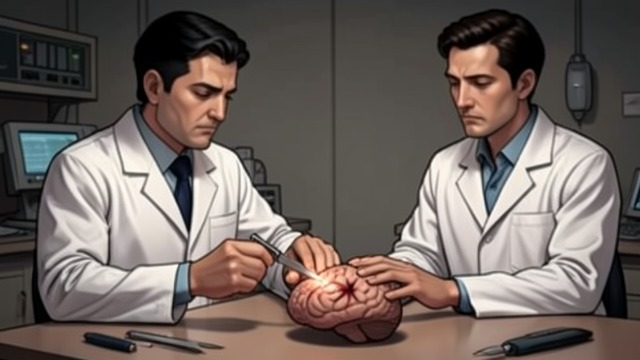
Joseph Wieder compares psychological memory treatment to cosmetic surgery, arguing that a person broken by traumatic recollection might benefit from having the harmful memory altered. His rhetoric makes intervention sound practical and humane: rather than leave someone incapacitated, a therapist could remove the memory that blocks ordinary life.
The Unanswered Risk
Richard Flynn challenges the analogy by asking whether this is brainwashing and what happens if the removed memory returns at a dangerous moment. Wieder recognizes the force of the question. A climber whose fear has been suppressed might be left vulnerable precisely when the original protective response is needed.
The exchange exposes a tension that the novel never makes easy to resolve. Relief from trauma may be valuable, but an intervention that changes a person’s response to the world also changes the person. Good intentions cannot by themselves answer who should authorize that transformation or who bears responsibility when it fails.
Experimental Patients
Treatment Without Consent
A Patient’s Account
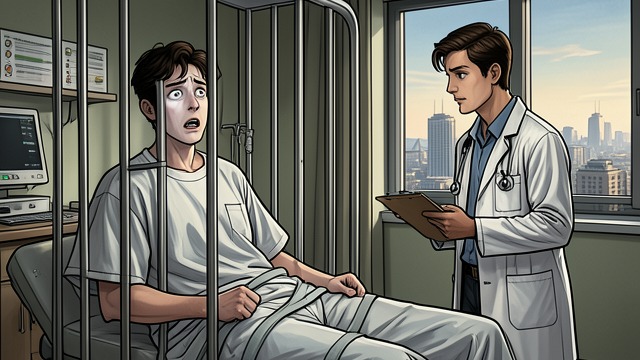
Frank Spoel says that he was placed in an experimental ward where patients received medication as part of a program associated with Joseph Wieder. He recalls nightmares, headaches, vomiting, rashes, and periods when patients were restrained. His account presents research not as an abstract theory but as an experience endured by people with little power to refuse.
Institutional Power
Spoel believes that Wieder’s decisions helped keep him confined after he expected a brief hospitalization. His lawyer’s assurances, the hospital’s authority, and the expert’s judgment leave the young offender with no effective control over his future. Whether every detail of his testimony is reliable remains uncertain, but its moral charge does not depend on treating it as a perfect record.
The episode makes the ethics of memory research inseparable from the ethics of institutions. A program intended to understand trauma can itself become a source of fear and injury when subjects are treated as instruments, and when professional authority outweighs their own accounts of what is happening to them.
Simmons’s Lost Years

A Life Rebuilt from Outside
The Blank Before
Following a serious head injury, Derek Simmons loses access to his earlier memories. When he awakens, even his own name and personal history are unfamiliar. Joseph Wieder helps him learn the facts of his former life and supports his release, giving the reconstruction an outward shape without restoring the experiences that once made it inwardly continuous.
Care and Dependence
Wieder finds Simmons housing, work, and continuing support. To the amnesiac Simmons, the professor becomes a benefactor; the relationship is built on kindness as he experiences it, while the concealed past remains outside his understanding. The assistance is real, but it also places Simmons within a life organized by another person’s account of who he used to be.
The arrangement complicates the line between care and control. Simmons is safer and more independent than he would otherwise have been, yet his dependence rests on missing knowledge. When his memories eventually return, gratitude is forced to coexist with suspicion about what Wieder knew and why he stayed close.
The Detonator Returns
Recovery as a Second Injury
Recognition and Recall
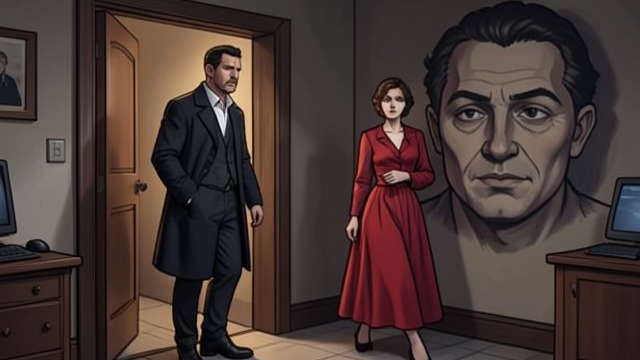
Derek Simmons sees a news report about a man he knew before his amnesia. That recognition unlocks memories he had not been taught: his work, his marriage to Anne, and the circumstances surrounding her death. He describes the experience as a sudden flood, as if a cover has been lifted from a buried history.
The Past Reopens
The returning memories also change the meaning of his present relationship with Wieder. A figure remembered as protector becomes entangled with the earlier story of betrayal, confinement, and the affair Simmons believed involved his wife. The recovered account does not simply restore a neutral past; it revives the anger attached to it.
The novel presents recovered memory as neither automatic cure nor automatic truth. It can restore a lost sense of personal history while also renewing old pain and inviting a new interpretation of past events. The return of memory becomes a detonator because it reorganizes identity and motive at once.
1987, when Laura Baines explains Joseph Wieder’s research to Richard Flynn
1987, during Richard Flynn’s late-night conversation with Joseph Wieder
1985–1987, during Frank Spoel’s confinement at Trenton Psychiatric Hospital
After the hospital attack, before Derek Simmons’s release under supervision
1987, when Derek Simmons recognizes a former colleague on television
